
Dempster to Tuktoyaktuk
By the time I reached Tombstone Territorial Park, I had already been riding north from Utah for a little over a week. There were plenty of places along the way that deserve their own stories, but Tombstone feels like a good spot to start this entry.
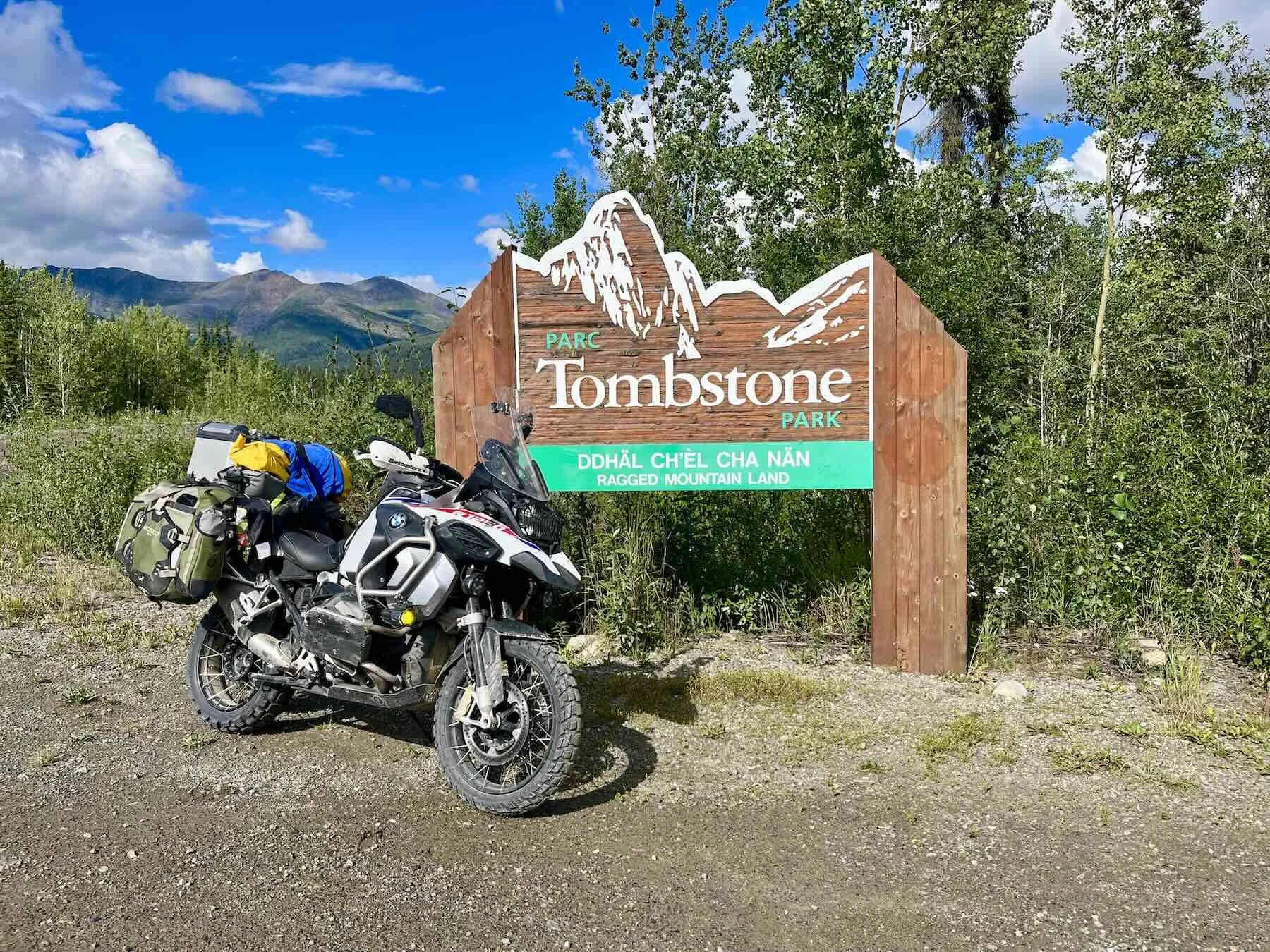
Tombstone Territorial Park sits along the southern stretch of the Dempster in central Yukon. About 70 kilometers after leaving the Klondike Highway, there’s a great little campground just off the road.
My morning routine took a little longer than usual because there was only one small patch of sun where I could dry my tent. There was a water spigot in camp, so I boiled enough to have safe drinking water on hand while I waited.
Once on the road, the mountains opened up almost immediately. They were green, sharp, and much larger than they appear in pictures. I stopped several times trying to capture the view, but some landscapes just don’t translate into a picture or video. You have to stand there to feel how far everything stretches.
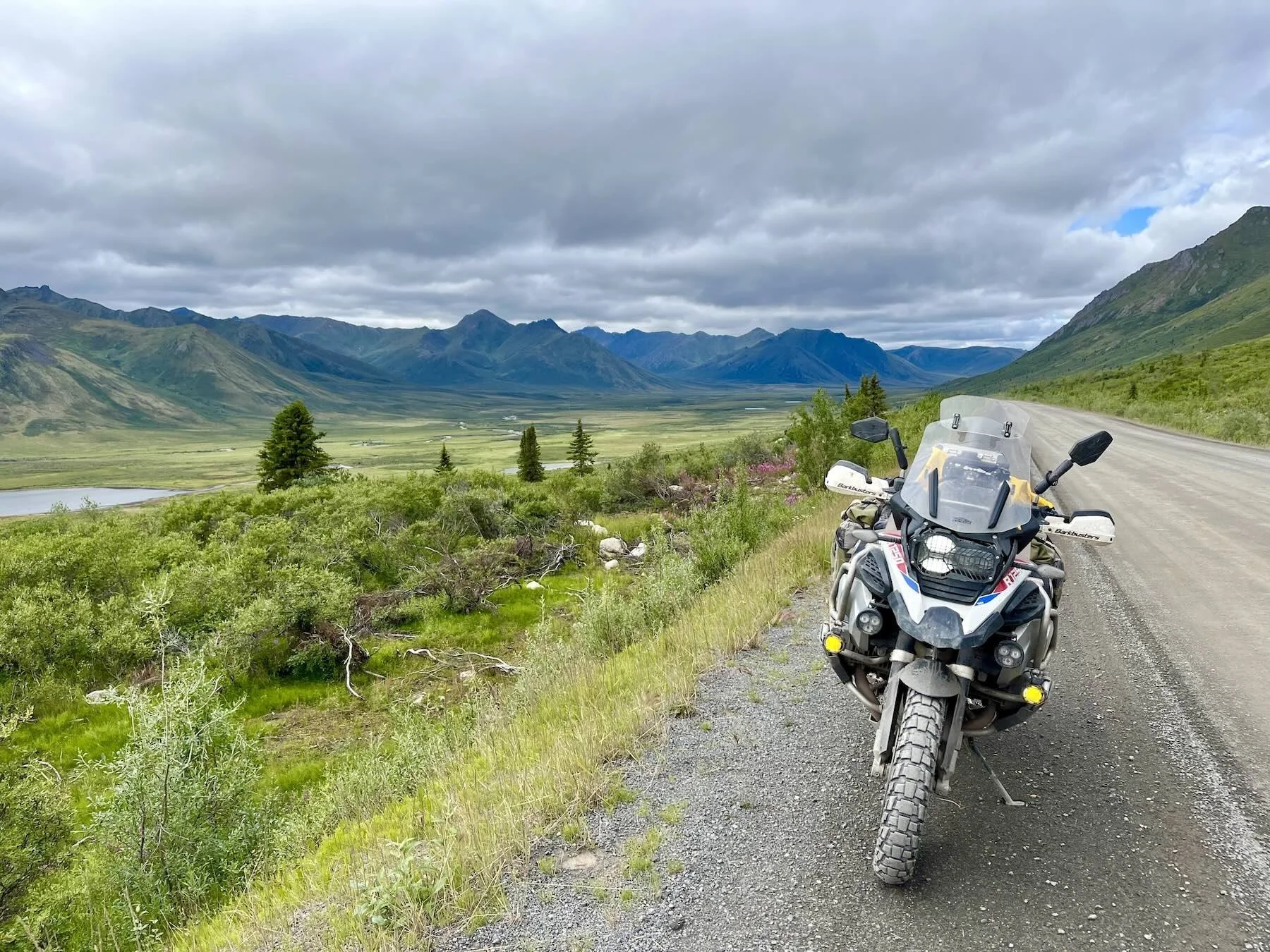
The weather was wet and cold. At one of the higher elevations, I rode through a section where tiny crystals were suspended in the air. It was like passing through clouds in a plane. The crystals caught the light and stuck to my face as I passed through them.
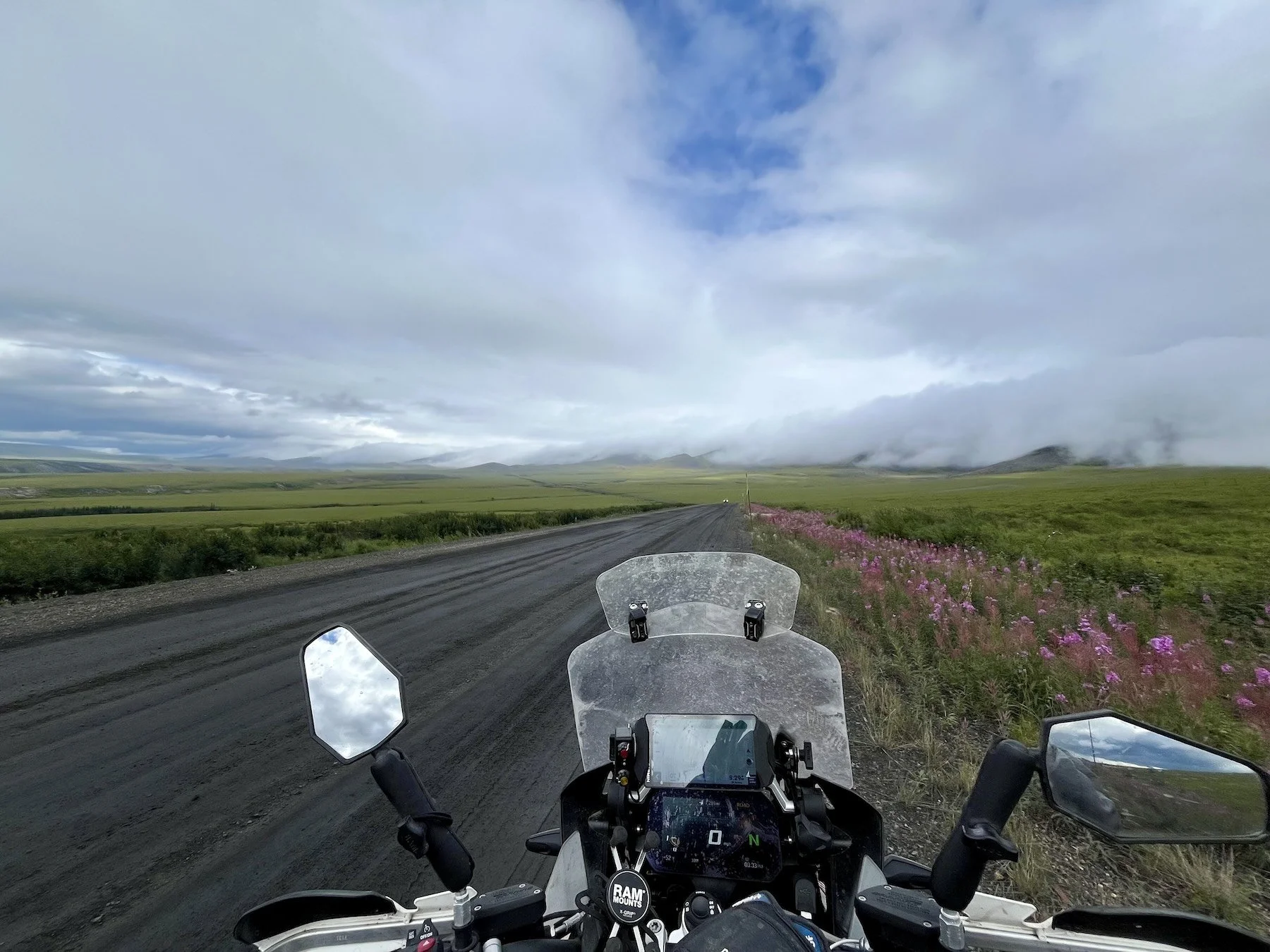
In places, the mud was slick enough that the bike would drift underneath me as I buzzed down the two track road. Mile after mile, layer after layer of mud continued collecting on the bike and panniers.
There weren’t many other people out.
Between Tombstone and Inuvik—about 665 kilometers—I only passed three or four travelers. With the road in that condition, most people had probably decided to wait for better weather.
Whenever I stopped and shut off the bike, the silence was immediate.
It was welcoming because there was nothing else around. No voices. No traffic. No Injury Lawyer billboards. Just mountains, tundra, wind, and the road.
At the same time, it could feel a little unsettling. The quiet reminded me how far I was from anything and how few people might come along if something went wrong.
That combination of peace and uncertainty can be difficult to understand, but I love it. Like the views, it’s something you just have to experience.
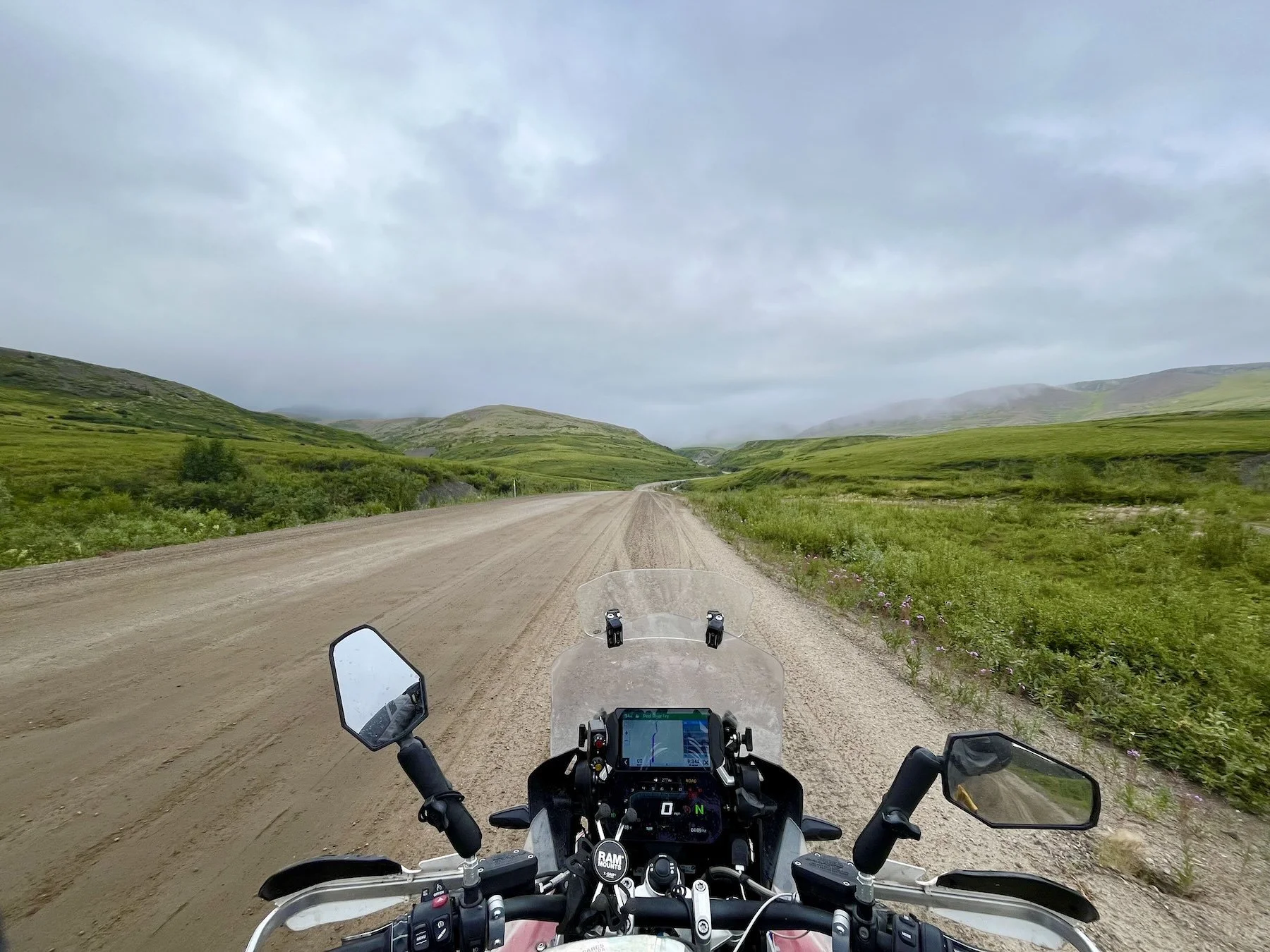
I stopped at Eagle Plains for fuel and chatted with two other riders out front. They had already been held up there for a few days.
One was a guy from Denver, Colorado who asked if I had an extra tube. Unfortunately, I didn’t. He had aired down his tires for better traction, hit a pothole hard enough to damage the wheel and pinch the tube, and had already used his spare. He was nervous about continuing alone without another one.
The second rider had come from Vancouver, British Columbia, with a gravel bicycle attached to a custom rack on her motorcycle. At Eagle Plains, she unloaded the bicycle and pedaled the rest of the way to Tuktoyaktuk. She was now climbing back onto the motorcycle for round two and planned to collect the bicycle on her return. She was the real deal.
After my credit card information was sent to a satellite for approval, fuel flowed into my tank by gravity from a giant barrel standing about 15 feet above the ground.
An hour north of Eagle Plains, I crossed the Arctic Circle and stopped to let it set in.
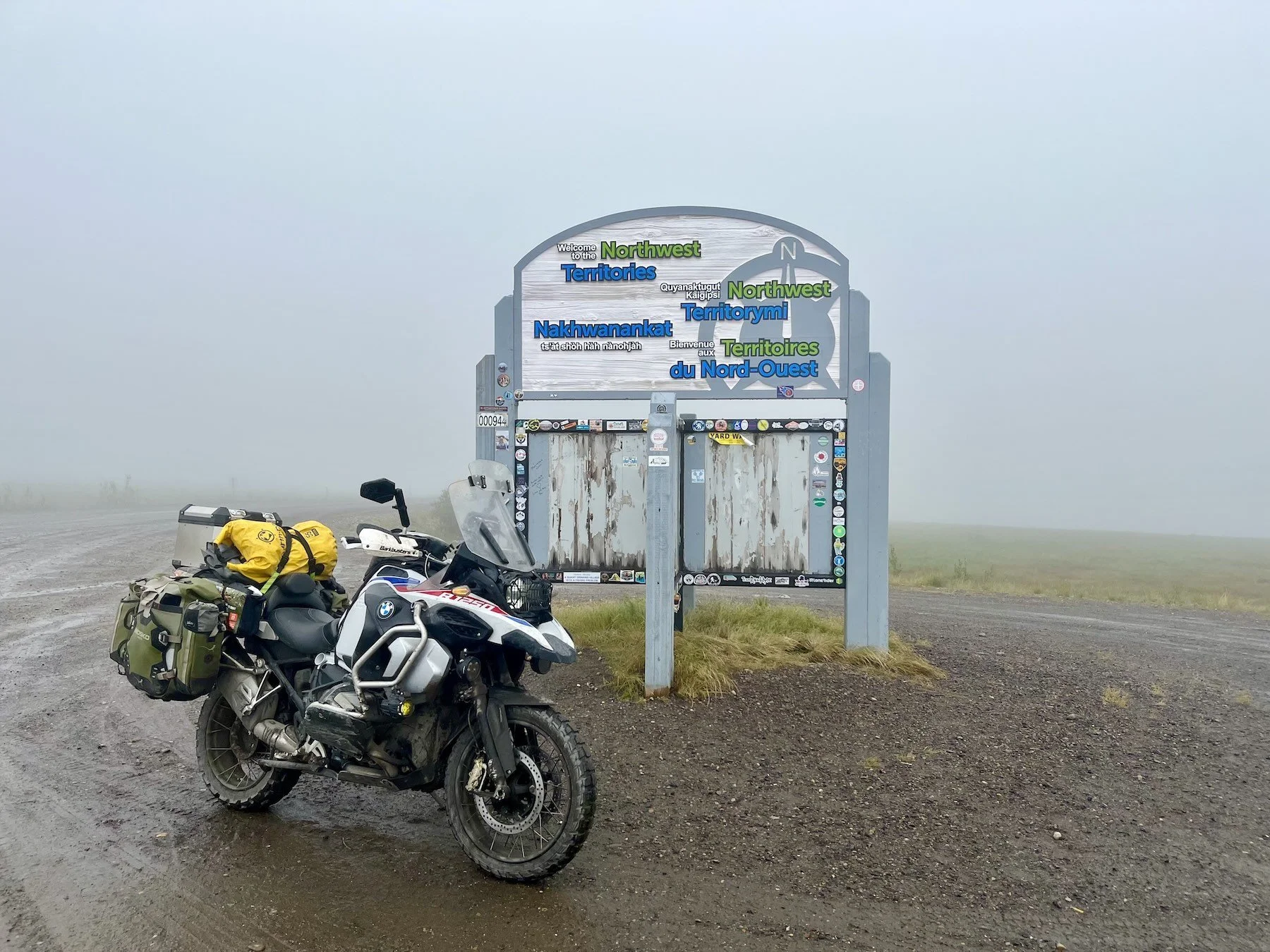
Farther north, the clouds dropped onto the road and visibility narrowed. The Northwest Territories sign appeared through the fog before I could see much of anything past it.
There were two river crossings along the route: the Peel River and the Mackenzie River.
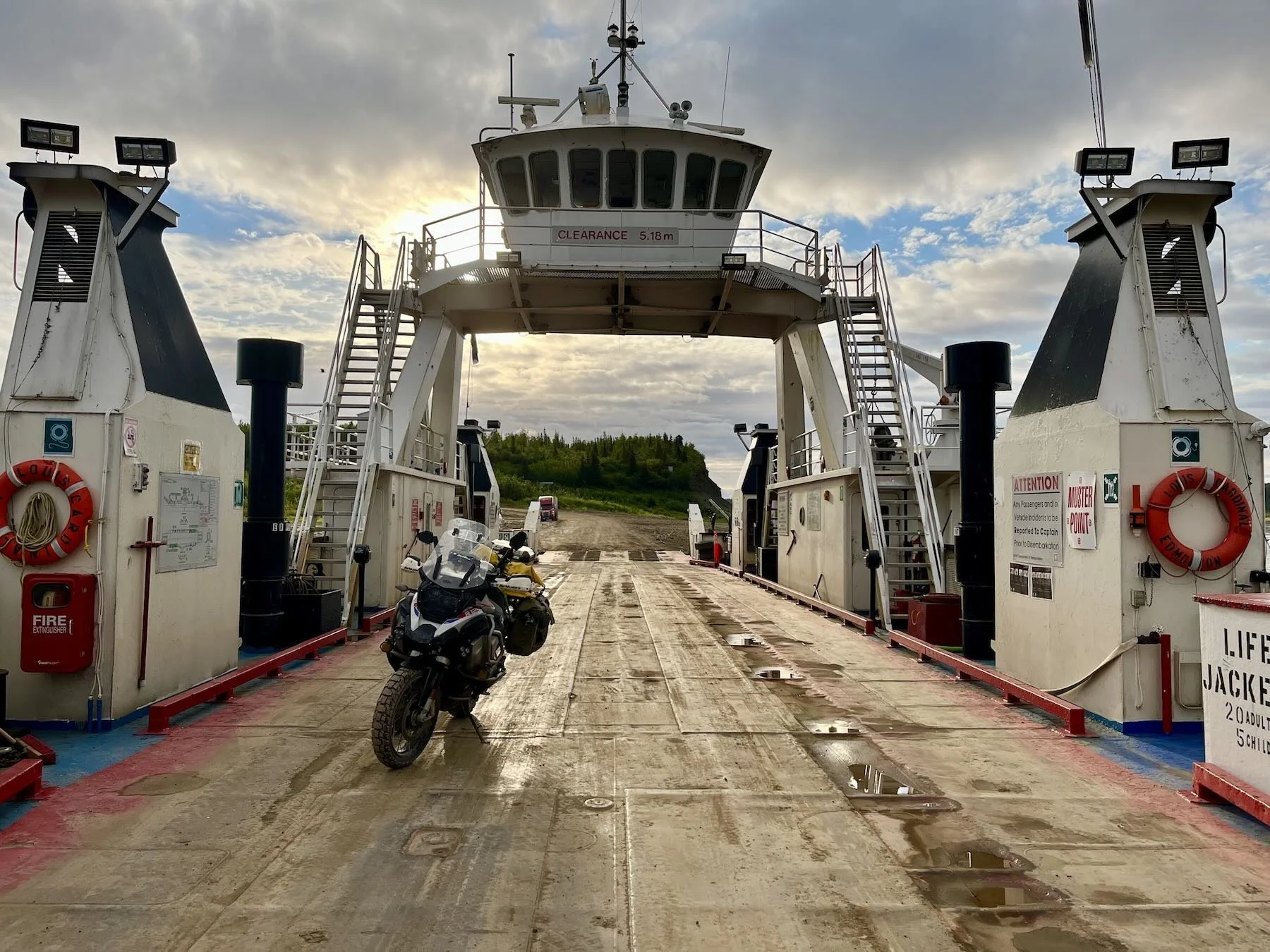
Both were crossed by ferry, and I was the only traveler aboard either one that day.
The empty deck, wet motorcycle, and slow rivers made the crossings feel more remote than they probably would have on a busy summer afternoon. On the Mackenzie ferry, I parked the bike and watched the shoreline slowly move away behind us.
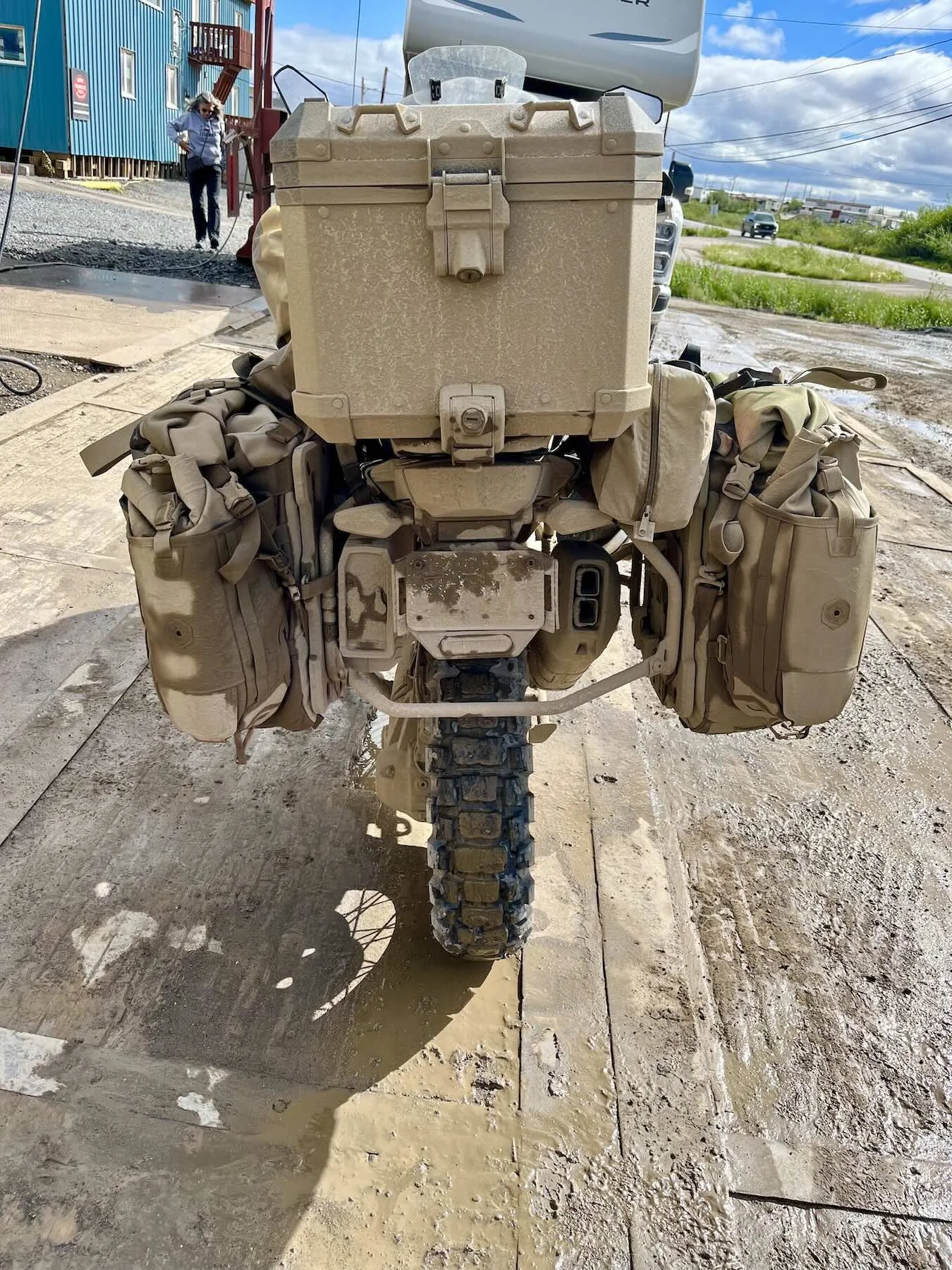
By the time I arrived in Inuvik, the motorcycle was carrying several layers of mud.
I stopped at Bob’s Gas on the north end of town and used the power washer to clean the bike and luggage. I rode past the wash area a few times before I spotted the hose lying in the dirt, fed from a rusty pole. It seemed like everything around me was covered in mud or rust.
For a few minutes after the bath, it looked like a motorcycle again.
I found a place to camp in Inuvik and buckled down for another wet night.
Two nights earlier, while camping near Whitehorse, I’d met another motorcyclist traveling south. He told me that Tuktoyaktuk had been sunny and around 21 degrees Celcius (70 degrees Farenheit) when he was there earlier in the week.
That sounded promising.
Weather and road conditions are usually among the first topics when you meet another rider heading in the opposite direction. The information is helpful, but in the North, it can be outdated before the conversation is over.
The ride from Inuvik to Tuk was nothing like the one he described.
Rain moved through during the ride, followed by hail. Wind gusted to 110 kph (68 mph) and averaged 40-55 kph (25 to 35 mph). Everything was wet again, and the motorcycle quickly began collecting another layer of mud.
The wind was the hardest part. It pushed against the motorcycle from the side and required constant attention. Every strong gust moved the bike toward the edge of the road or into the opposite track. Leaning into the wind for balance on a muddy track was like an awkward dance and I definitely wasn’t the one leading.
There wasn’t much to do except stay loose on the handlebars and keep moving north.
Five hours after leaving Inuvik, Tuktoyaktuk came into view.
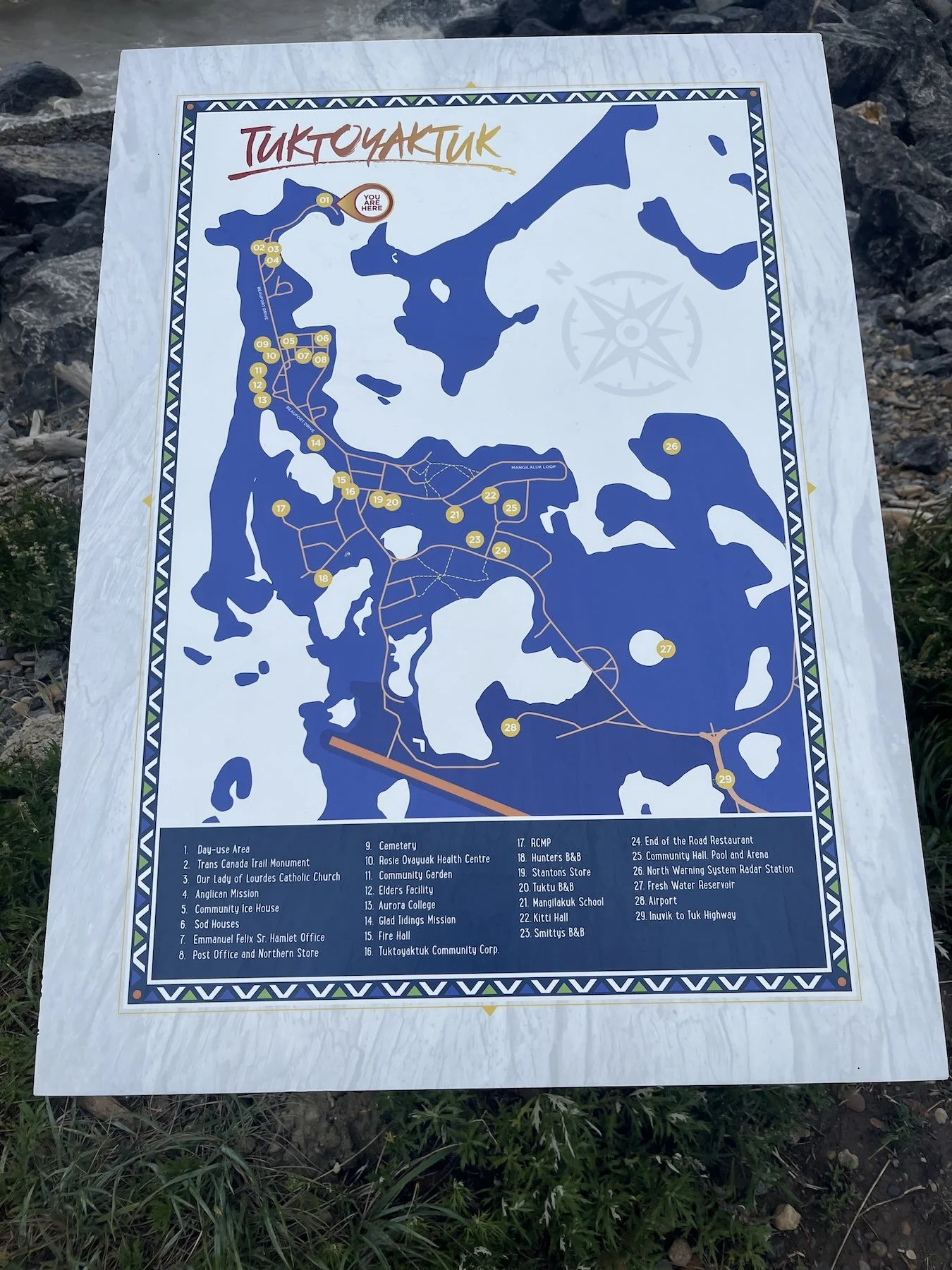
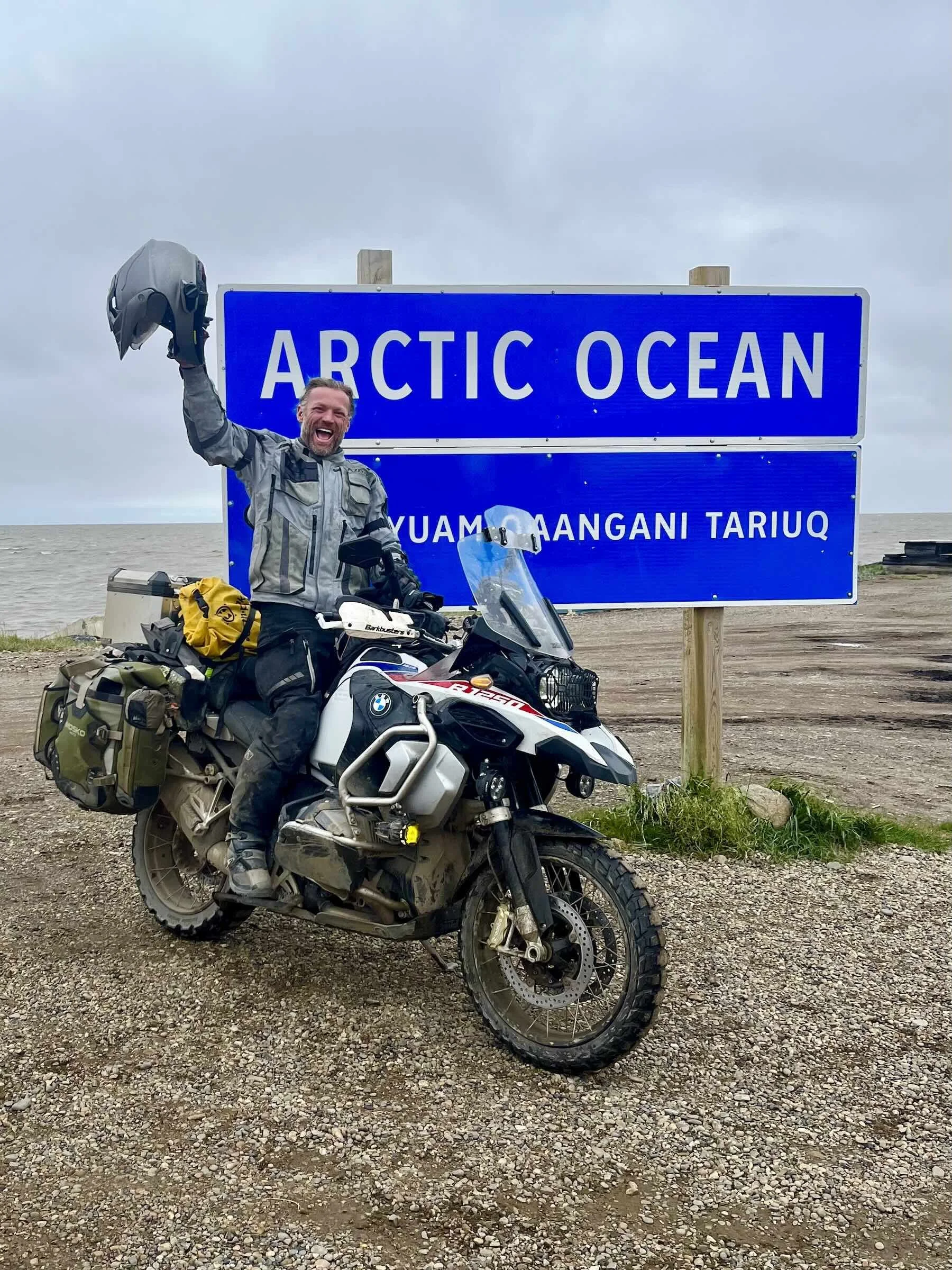
I rode through until my front tire touched the Arctic Ocean at the “You Are Here” pointer on the image above.
My gear was soaked on the outside, but I was still dry underneath. The temperature was only about 2 degrees Celsius (35 degrees Fahrenheit) and I felt it. The Arctic swim I’d planned didn’t happen.
For a few minutes, I waded ankle-deep in the ocean.
Standing in that water made the destination feel real in a way a picture of the sign alone couldn’t.
There was a couple sitting in a truck nearby. When I asked if they would take a picture, they climbed out and took several, making sure the bike, the sign, and the ocean were all in the frame.
I couldn’t stop grinning. Through rain, mud, wind, and long empty stretches, I had made it to the Arctic Ocean.
You are welcome to leave a comment below.
It will ask for a name, email or website…but only one item is required. This is to prevent blank comments.
After entering one of those items, you can comment as a guest.