
San Javier Mission
The route I chose that day crossed Baja California Sur from west to east to San Javier Mission, high in the Sierra de la Giganta mountains southwest of Loreto.
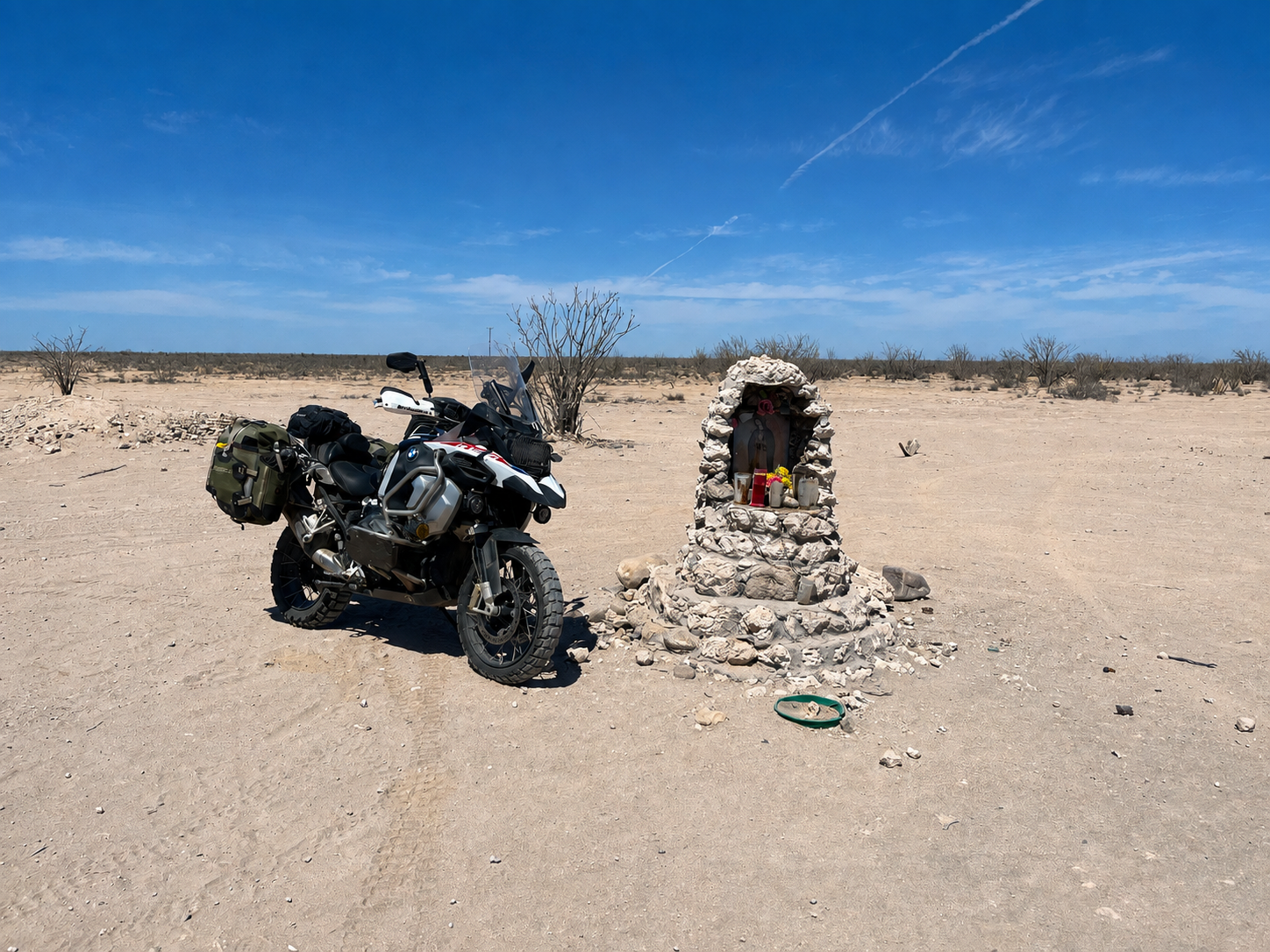
A shrine sat at the beginning of the route across the peninsula.
The dirt road was remote, and only parts of it showed much evidence of maintenance. Some sections were open enough that I could ride fast. Others were technical, sandy, or covered with small boulders that adventure riders commonly call “baby heads”—loose, rounded rocks roughly the size of a baby’s head that make it difficult to hold a clean line.
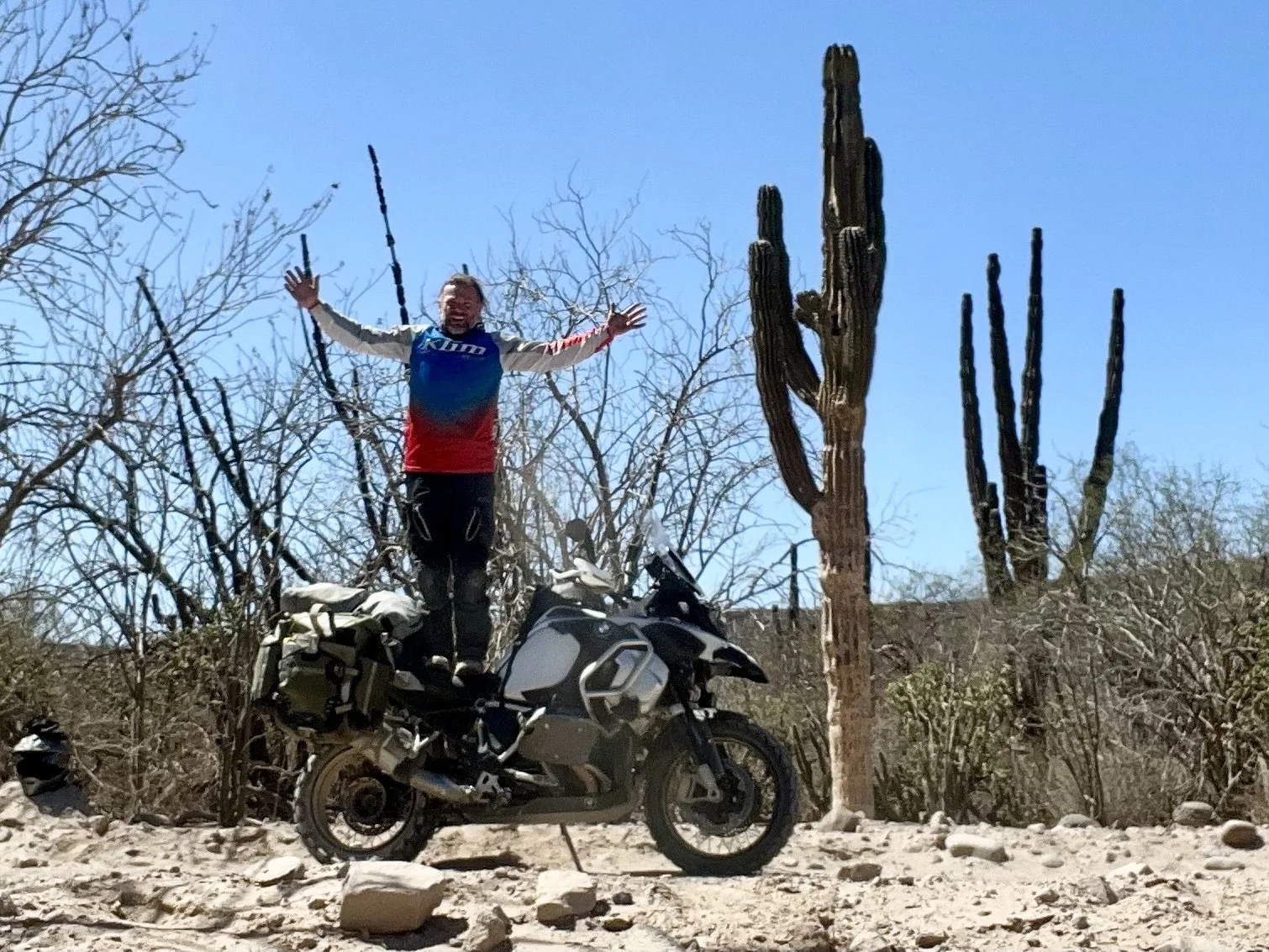
Mexican Giant Cardón cactus averages 18 feet tall and live for hundreds of years. This one is a baby at only about 12 feet tall.
When my bike is fully loaded, it weighs about 660 pounds. On a smaller motorcycle, you may be able to muscle your way out of a bad decision. On a bike this size, turning around in boulders or in six inches of sand may not be an option.
That makes reading the terrain and choosing a line especially important. You need to look far enough ahead to understand where the bike is going—not only where the front tire is at that moment.
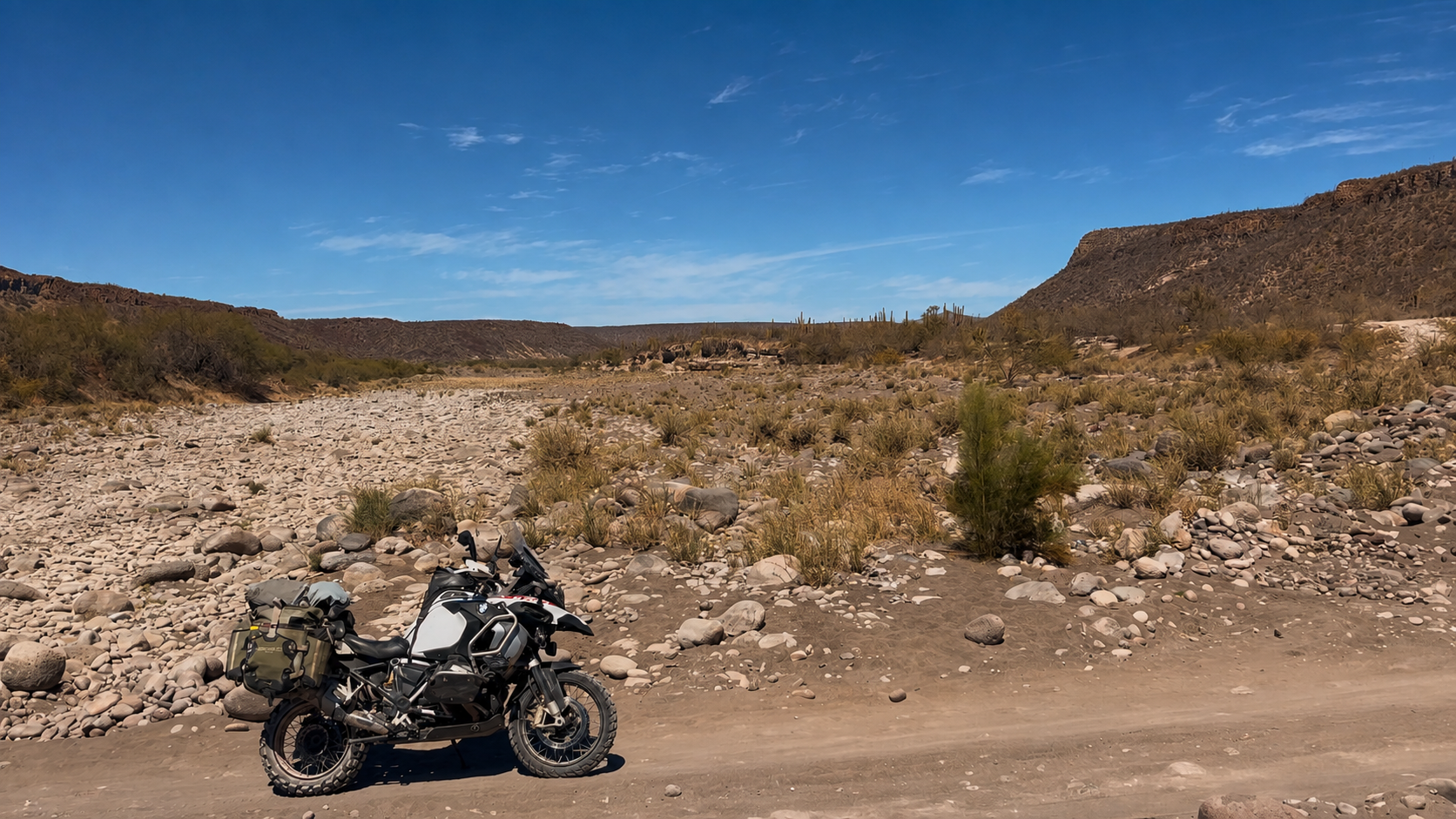
The variety of terrain was part of what made the route so much fun. One moment I could let the bike run and carry some speed. The next required slow, deliberate riding through rocks or sand. Then I would reach something uncertain enough that I needed to stop and look at it on foot.
I remember how ridiculously happy I was to be there.
This kind of riding is exactly why I have an adventure bike.
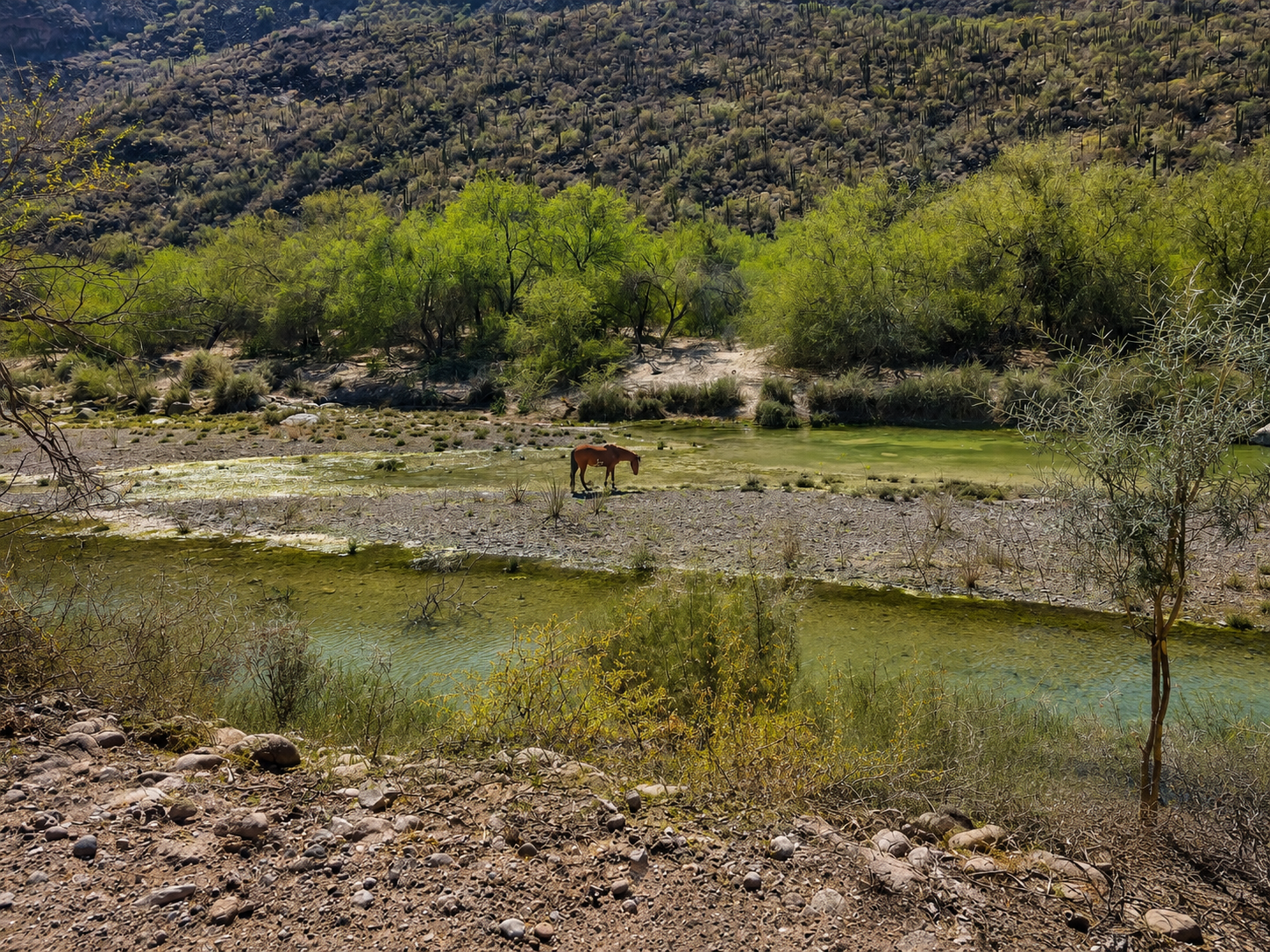
Lots of wild horses, donkeys and goats in this area.
A Wrong Turn in Deep Sand
At one point, a sandy section split in several directions. I had to make a quick choice and continued through one of the openings.
Just beyond the crossing paths, I stopped to check my satellite GPS.
The GPS could show my location, but because I had stopped, it couldn’t determine which direction the motorcycle was facing. I needed to start moving again before it could establish my heading and confirm whether I had taken the correct path.
I rode forward until the GPS finally caught up.
I had chosen the wrong way.
Now I needed to turn the bike around.
It was March, and the temperature reached about 90 degrees that day. The trail where I needed to turn was covered in roughly six inches of soft sand.
With only a 30-inch inseam, I’m a little vertically challenged for such a tall and heavy motorcycle. That normally isn’t a major problem once the bike is moving, but it becomes more noticeable when 660 pounds of motorcycle and luggage are leaning toward the downhill side of a sandy embankment and your foot can’t reach the ground.
I nearly made it around. As I worked through the turn, the motorcycle eventually went down.
I tried dragging the bike into a better position, but it wasn’t moving. Not enough, anyway.
Eventually, I removed a pannier and my top bag. Lightening the motorcycle was the only way I was going to pull it away from the embankment and get it positioned where I could stand it back up.
One of the reasons I chose a bike with a boxer engine is the two cylinders extend horizontally from opposite sides of the motorcycle. When the bike goes down, one of those cylinders keeps it from lying completely flat.
That gives me an advantage when I have to pick it up. I’m not starting the lift from the ground in the way I would with most motorcycles.
Don’t get me wrong. It’s still a heavy bike.
By then, I had spent a couple hours traversing the peninsula’s rugged terrain. After wrestling the motorcycle out of the sand, unloading it, repositioning it, and finally getting it upright again, I was feeling it—but still happy to be there.
I reloaded the bike and got moving again.
San Javier
My next destination was the San Javier Mission, approximately 35 kilometers southwest of Loreto in the Sierra de la Giganta.
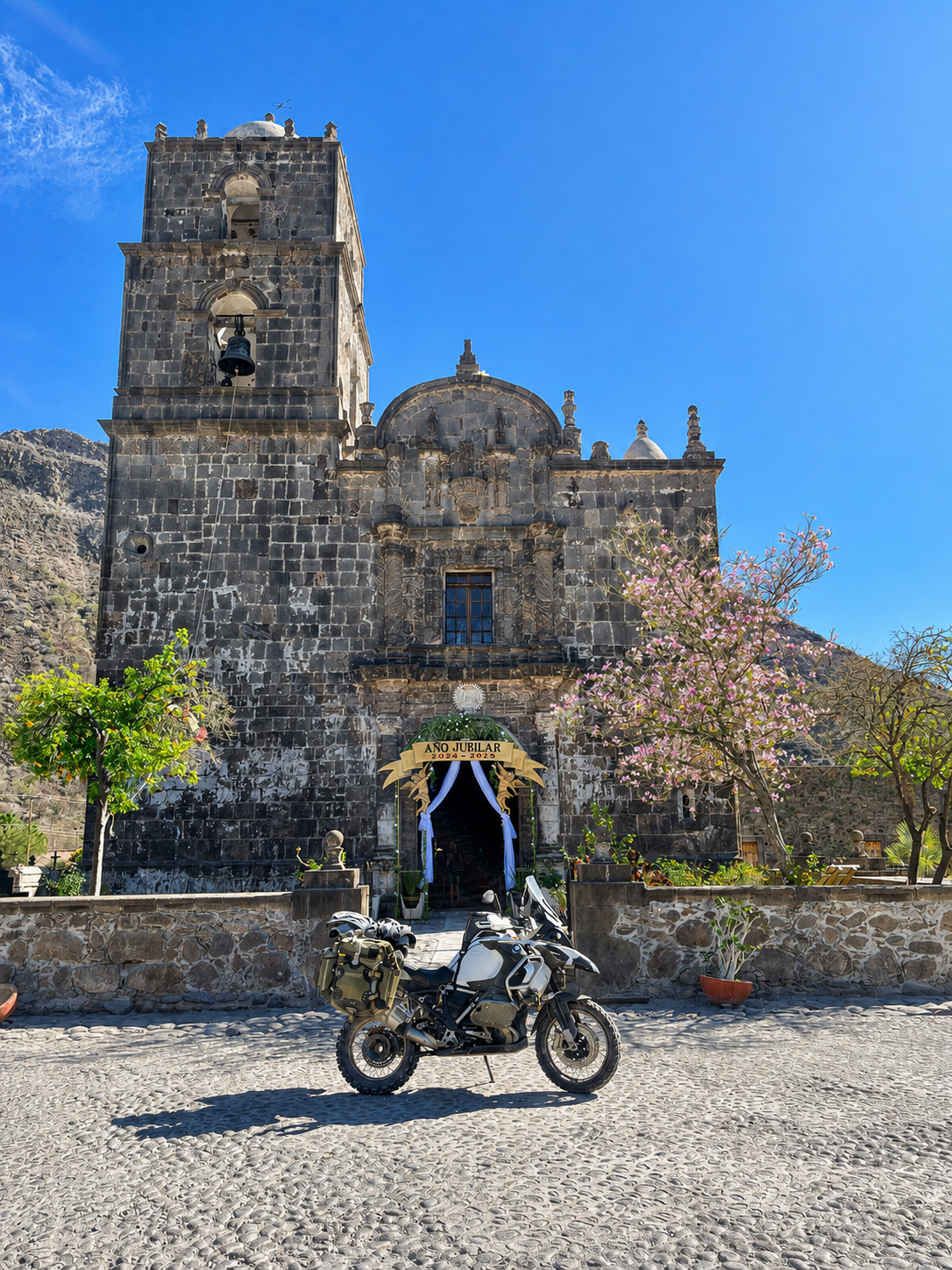
The mission was founded in 1699, and construction of the stone church standing today went from 1744 to 1759. Looking at the building and its remote mountain location, it’s hard to imagine the work involved in constructing something like that.
I wandered inside and sat in a pew a couple of rows from the front. More than anything, I wanted to get out of the heat and cool off.
A group of four people was standing near the front of the church. They appeared to be a family. A man and woman may have been the parents of one of the younger adults, with the fourth person possibly being a spouse or partner.
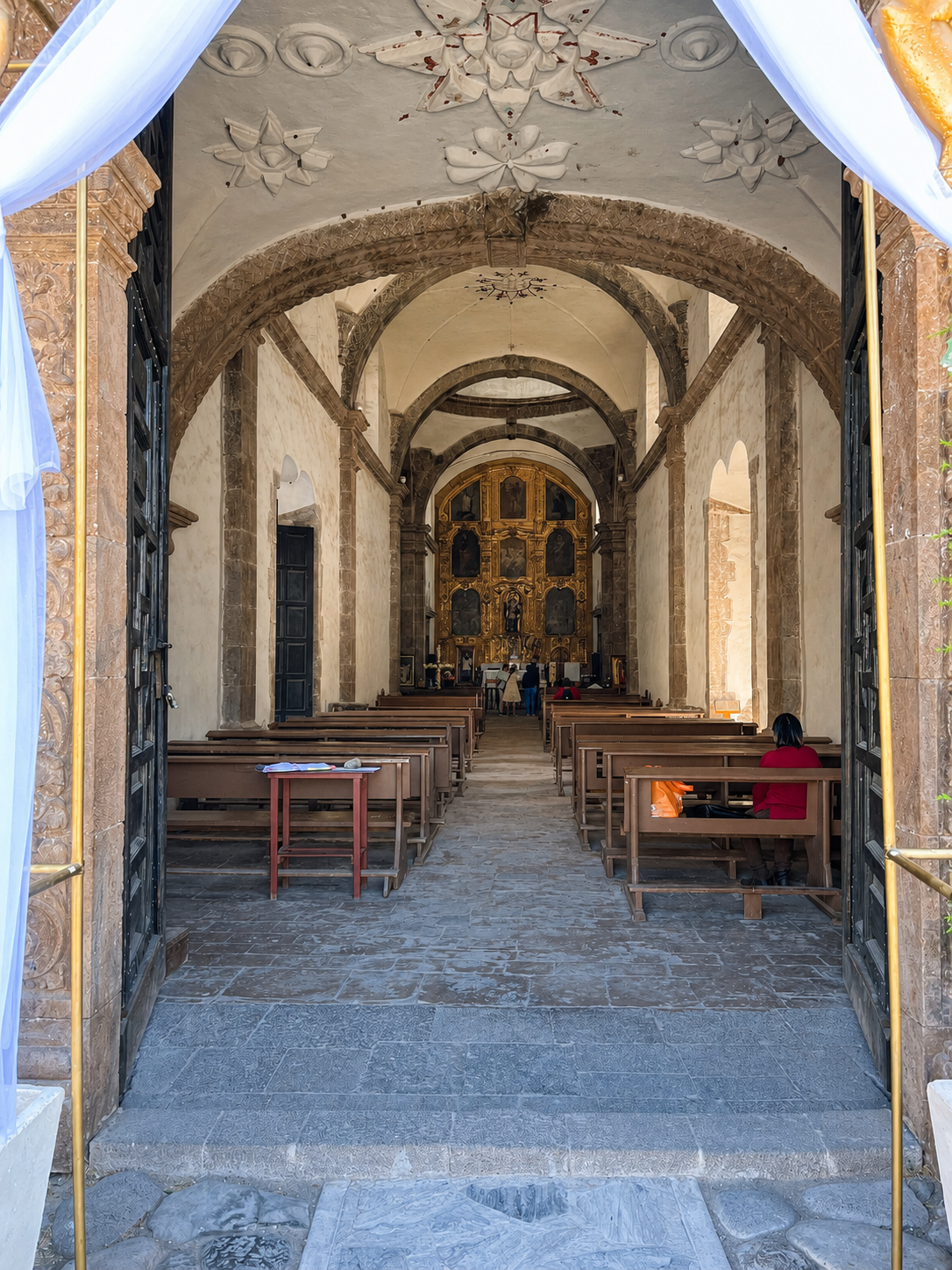
The older man and woman began singing and making gestures with their hands. They were each singing something different, and neither song seemed to follow a formal structure. It was as though they were each singing a prayer as it came to them.
They moved closer to the younger couple and placed their hands on their shoulders. As they continued singing, they slowly ran their hands down the younger adults’ backs.
This continued for about twenty minutes.
Twenty minutes could seem like an eternity to sing something being created as it came to you—especially while the person beside you was singing something entirely different.
But it didn’t seem long at all.
I was completely engaged in what was happening in front of me.
I’m not a religious person, but the love moving between those four people was impossible to miss. I may not have understood the words or the ceremony, but I could feel the sincerity of it.
When they finished, everyone hugged. They remained together for a few more minutes and then turned to leave.
As they approached, I stopped them and asked what had just happened.
With the help of Google Translate, the man I believed to be the father explained that it was an anointing of the Holy Spirit.
I told them it had been beautiful.
Without hesitation, he asked if I would like them to do the same for me.
An Unexpected Invitation
The man and woman stood behind me, one slightly to each side, and began singing again.
Even though I speak very little Spanish, I understood enough to know that the man was asking the Spirit to fill me. He was also encouraging me to open myself and allow the Spirit in.
I don’t know how to describe what happened, but the amount of energy moving into me was incredible.
These were complete strangers. We didn’t speak the same language, had no shared history, and would probably never see each other again. Yet they offered me the same care and attention they had just given members of their own family.
Earlier that day, nearly everything had been physical. I had been reading terrain, choosing lines, and crossing arroyos. Then I had spent what energy I had left digging it out of deep sand in 90-degree heat.
A couple hours later, I was standing inside an old stone mission while two people stood beside me and offered unconditional belonging.
People at home sometimes look at me with confusion and fear when I tell them about the places I plan to ride.
Experiences like this are exactly why I choose these routes.
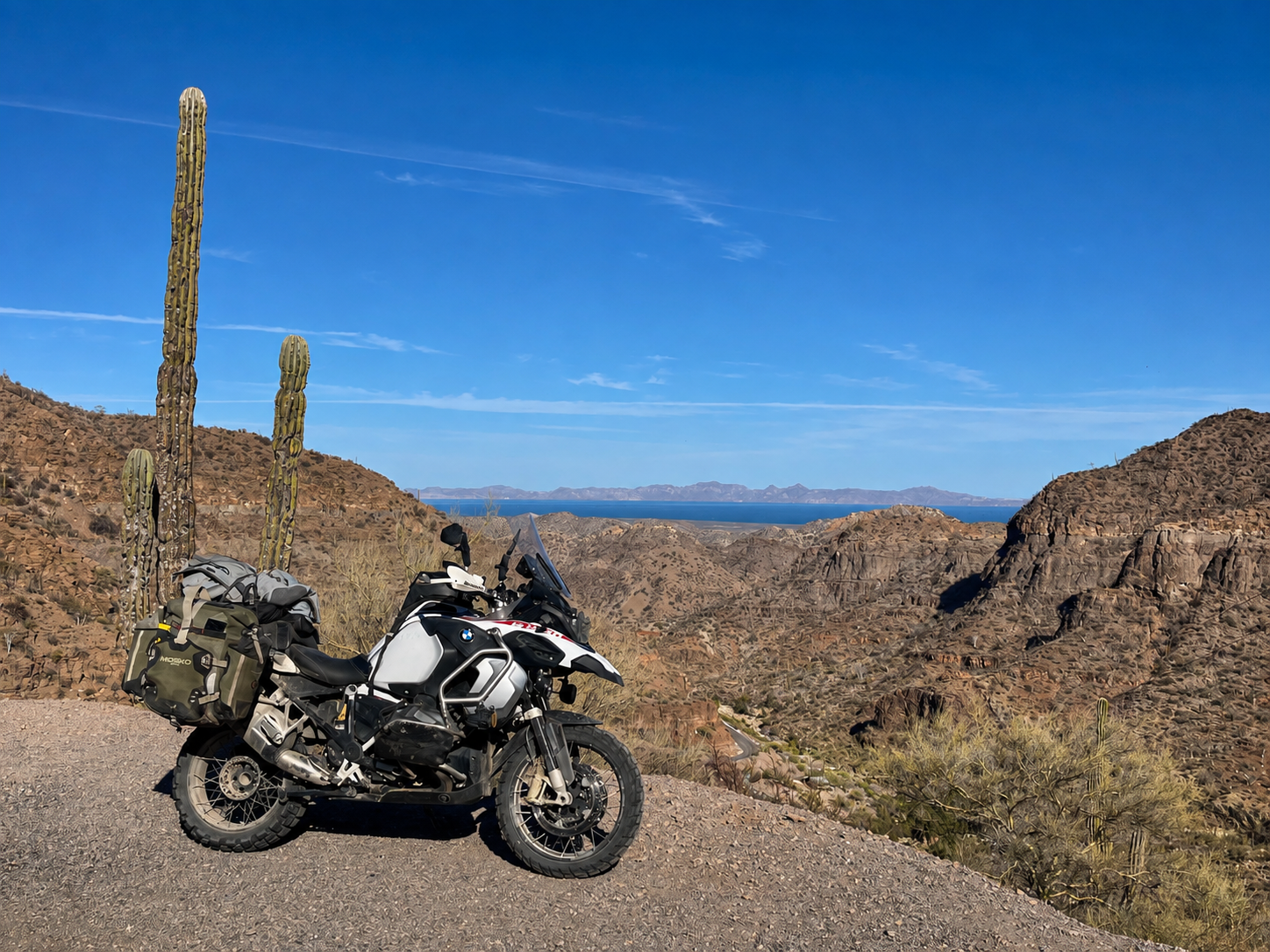
On my descent toward Loreto, the Gulf of California came into view.