
Connecting the Dots
A real example of Value Selling in distribution, and why the opportunities your salespeople need are in conversations they’re already having.

Salespeople collect pieces of information every day that could lead to opportunities. It could be something a customer mentions during a sales call, something they notice walking through a warehouse, or knowledge they’ve gained through experience.
These are the dots salespeople need to connect. Each dot might seem unrelated to the others. But when you start connecting them, opportunities can go far beyond what anyone originally thought.
At MB Resources, Value Selling is one of the skills I work with salespeople to develop. That means recognizing how different pieces of information relate to each other, exploring what those connections could mean for their customers, and helping the people involved see the value.
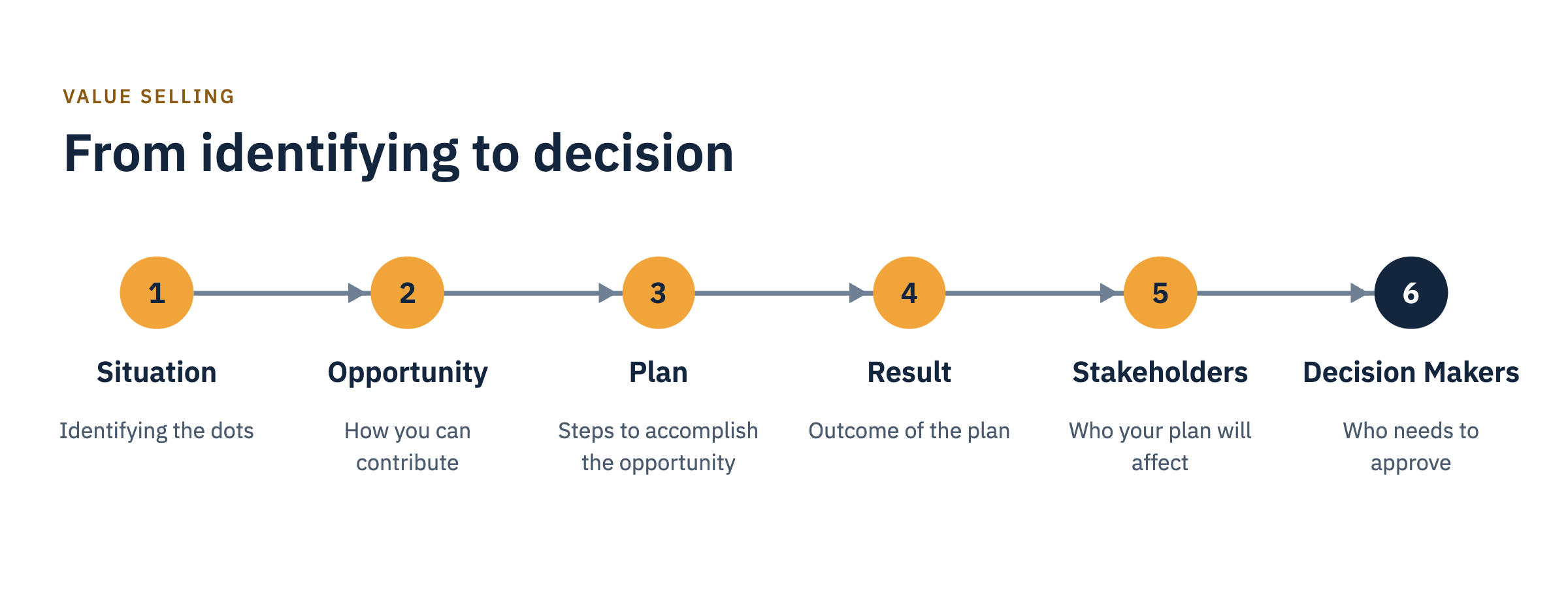
As many of you know, here are the key components of Value Selling.
It’s Not Always About the Money
When we think about Value Selling, we often think about money. We put together a nice spreadsheet, show the return on investment, and wonder why the customer doesn’t bite.
The numbers might make perfect sense, but each stakeholder in the decision-making process is going to see value differently. Yes, some may see money as the value, but others might be more concerned about added workload or product marketability.
It’s not about convincing stakeholders to see the opportunity your way. Our job is to understand what matters to each stakeholder and help them recognize the value through their own lens.
Here’s an example of how this played out when I was representing an indoor air quality (IAQ) manufacturer.
An Opportunity Starts with a Phone Call
A Territory Manager called looking for a filter cabinet he could sell to residential new construction (RNC) contractors. The distributor’s current OEM cabinet was too expensive for that market, and he wanted to know if my manufacturer had anything that would work.
We had a filter cabinet, but our pricing wasn’t going to get the business either.
I asked how many cabinets the distributor was selling annually across the entire company and took that number to my manufacturer. If we could move all the business over, could we get the price where it needed to be?
The answer was no.
But I knew my manufacturer could build custom cabinets. We had room to simplify our cabinet, keep advantages over the product the distributor was currently using, and offer it at a lower price while holding margin.
Instead of focusing on one Territory Manager’s new construction business, we could replace existing cabinet business across the entire company and use that volume to justify a custom build.
The manufacturer saw the value and agreed.
The original request was for a competitively priced filter cabinet. The opportunity for the manufacturer came from connecting the distributor’s total cabinet business with something I knew my manufacturer could do.
Situation = Need a Price Point Cabinet
Opportunity = Move Cabinet Business
Plan = Custom Cabinet
Result = Potential New Business
Stakeholder = Manufacturer
Decision Maker = Manufacturer
We now had a product and a price that could work, but other people needed to see value in the change before we could move forward.
Value Looks Different Depending on Who’s Looking
The distributor’s director and sales managers were open to a company-wide change, but only if the other Territory Managers bought in. Many had been selling their existing cabinet for years. Contractors knew the product, and the business was established.
For the RNC Territory Manager who originally called, the new cabinet opened up business he couldn’t get at the existing price. For the others, we were asking them to spend time changing business they already had.
Those are two very different perspectives on the same opportunity.
We brought in samples and showed the Territory Managers what we had. We also placed a few cabinets with key contractors so they could work with the product themselves.
Once everyone got their hands on the cabinets, they saw the quality and advantages of the product (value). We got the buy-in needed to make the transition.
Situation = Need TMs and Contractors Buy-In
Opportunity = Add RNC / Move Existing Business
Plan = Custom Cabinet Show-and-Tell
Result = Buy-In / Distributor Moves the Business
Stakeholders = TMs and Existing Contractors
Decision Makers = Director and Sales Managers
We now had buy-in from all the stakeholders and decision makers.
The distributor moved the business.
One Opportunity Leads to Another
The manufacturer also offered a furnace riser that paired perfectly with the filter cabinet. During the custom cabinet layout, we matched the paint finish to the riser so the two looked like a single assembly. The combination made installation easier and would give the contractor a cleaner-looking finished install.
Here’s where knowing your audience’s value speaks volumes.
Contractors, who are typically labeled as only caring about price, could build their own riser for less money than buying ours. But by showing how easily the products went together and how the finished installation looked, contractors saw the value and were willing to pay more for the riser with the cabinet.
And we’re not done yet!
The manufacturer also offered a base for applications where a filter cabinet and riser wouldn’t work. The distributor was already buying a similar base from a third vendor, and with the other product categories we were now moving, bringing that business over made sense as well.
For the distributor, that meant a cabinet that opened up the RNC market, a better product on their existing business, a riser that contractors were willing to pay more for, and one less vendor to manage. All of this came from a single phone call asking for a lower-priced product.

Professional Salespeople Need Professional Coaching
Nothing in this story came from following a process. It came from knowing what the contractors needed, knowing what the manufacturer could build, knowing the distributor’s business, and seeing how those pieces fit together. That kind of judgment doesn’t come from a pre-built training program.
Your salespeople already have the dots. What they need is help recognizing them and seeing how they connect.
Isn’t that what a regional or sales manager is for?
Ideally, yes. But most managers’ time is limited and coaching tends to be what gets pushed off. Also, salespeople tend to open up more about their challenges with someone who isn’t their boss.
A typical MB Resources coaching engagement is a one-on-one session every two weeks to talk through goals, opportunities, wins, and losses, and build habits like Value Selling. We work from situations they’re dealing with right now. What do they already know about the customer? Who else could benefit? What resources haven’t they considered?
I’m not handing them a script. Because we work from opportunities they’re already chasing, coaching doesn’t pull them away from selling. It’s tied to real business from the first conversation, and each situation gives them more to draw from in the next.
When can we talk about your team?
Matt Butler
MB Resources
801.244.4844
See The Distribution Sales Gap here.